1. The Interconnectedness of Dental Health and Posture
Posture isn’t just how you sit or stand, it’s a dynamic process. The ideal posture for any position is one that expends the least effort to support a person’s body while meeting its needs for balance and breath.
The Posture-Breath Connection: A Simple Test
Try this: lower yourself into a deep squat (as far as is comfortable), feet parallel and shoulder-width apart, while holding an object or weight in front of you. Once you’re settled, let go of the object. What happens? Did you notice your muscles contract to fight falling backward?
Now hold try again, but instead of releasing the object, just reduce your grip until it’s just enough to keep your balance. Take a deep breath. Notice how the movement of your chest and abdomen when you breathe affects your posture, just breathing likely caused your body to fall backwards too.
This small experiment shows a big truth: our posture constantly shifts in response to load, breath, and gravity—and the airway is at the center of it all.
The Airway: Your Body’s Top Priority
To balance, we find a center, and at the center of that center is our airway. Our brain monitors our airway more than other body region and adjusts our posture to maintain the most efficient flow possible. The structures surrounding the areas we breathe into are crucial to how we stabilize and orient ourselves: our ribs, neck, head, throat, tongue, jaws, and teeth.
2. Understanding the Anatomy

The Head-Neck-Jaw Relationship in Postural Alignment
Visualize your head and chest as spheres stacked on top of your pelvis. The pelvis is dynamic—it shifts based on your foot position and ground surface—making balancing the two spheres above it a challenge. The neck acts as a flexible bridge to make this balancing act possible, adjusting to keep the head level and the airway open even when the neck is bent.Central to this mechanism is a U-shaped bone called the hyoid bone which sits at the top of the windpipe in the middle of the neck. It acts like a tent pole holding the fabric of your neck (skin, muscles and fascia) away from the top of the windpipe. This ‘fabric’ attaches from your lower jaw all the way to your collarbone, chest, and sternum. With every bend and turn of your neck, your lower jaw will adjust the position of your hyoid bone – unless, of course, your neck has restricted movement!
The Vestibular System and Its Connection to the Jaw
In order to keep our head level and our airway open, we have sensory organs all over our body. Many of these sensors are in our head, or at least their inputs are processed there. Inside the temporal bones near your jaw, deeper than the ear canal, lives the vestibular system. The vestibular system measures the movement of tiny calcium carbonate crystals, called otoconia, in the inner ear as they interact with the hairs that line the ear canal. This system sits right next to the temporomandibular joint (TMJ), your jaw joint. The TMJ is loaded with positional sensors which provide feedback to your brain about your body’s position and how it relates to the surface you’re on.
3. Sensory Inputs and Postural Control
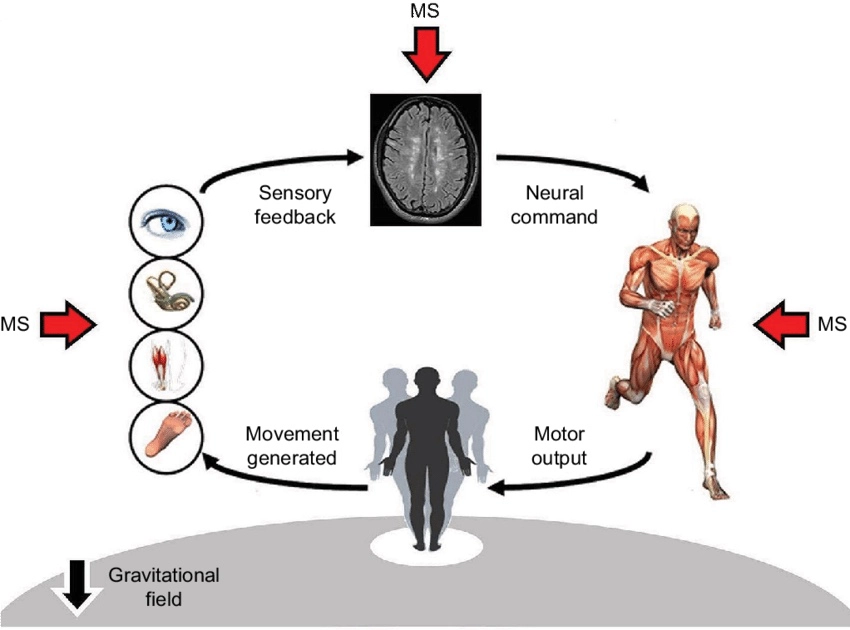
How the Brain Utilizes Sensory Information for Balance
The brain uses our sensory system to balance and center our body. This system includes our vision, vestibular system and positional sensors in the rest of our body.
Vision
Our vision helps us balance and navigate through space by providing spatial orientation, depth perception, and awareness of movement.
Vestibular System
The vestibular system detects head movement and positioning.
Proprioception (and other types of mechanoreception)
Positional sensors, present in our skin, muscles, joints and the chest cavity, operate by sensing pressure. This is called mechanoreception.
Our joints have a type of mechanoreception called proprioception, which literally means “grasping of one’s own position”. In our joints, pressure is sensed across the joint surface and connective tissue. You can experiment with this by standing and shifting your weight from right to left and noticing the feeling in your feet, ankles, knees and hips.
The pressure in our chest and abdomen is sensed via a type of mechanoreceptor called baroreceptors. These sensors measure the change in pressure in chambers of your body like the lung cavity, nose and throat. They help the body maintain blood pressure, particularly when changing positions, which is vital to stability. If you’ve ever stood up quickly, gotten lightweighted and lost your balance – you moved too fast for your baroreceptors!
Your muscles and tendons have other mechanoreceptors called muscle spindles and golgi tendon organs. These are fancy names for sensors that can detect the tension created when muscles are under load. If you stand up again and lean to one side, your muscles on that side will contract to support you and the mechanoreceptors will signal to your brain that you’re on that side and keep the muscles engaged for balance.
The Impact of Dental Misalignment on Sensory Processing
Your jaws and teeth act like a neurological GPS. Every contact point provides the brain with feedback about where the head is. If the bite is uneven, that feedback becomes distorted. The result? The neck, shoulders, and even hips may begin to compensate. The resulting neck tension and restriction can lead to fewer options for your body to center the airway, leading to poor posture and musculoskeletal issues.
4. Common Postural Dysfunctions Related to Dental Issues
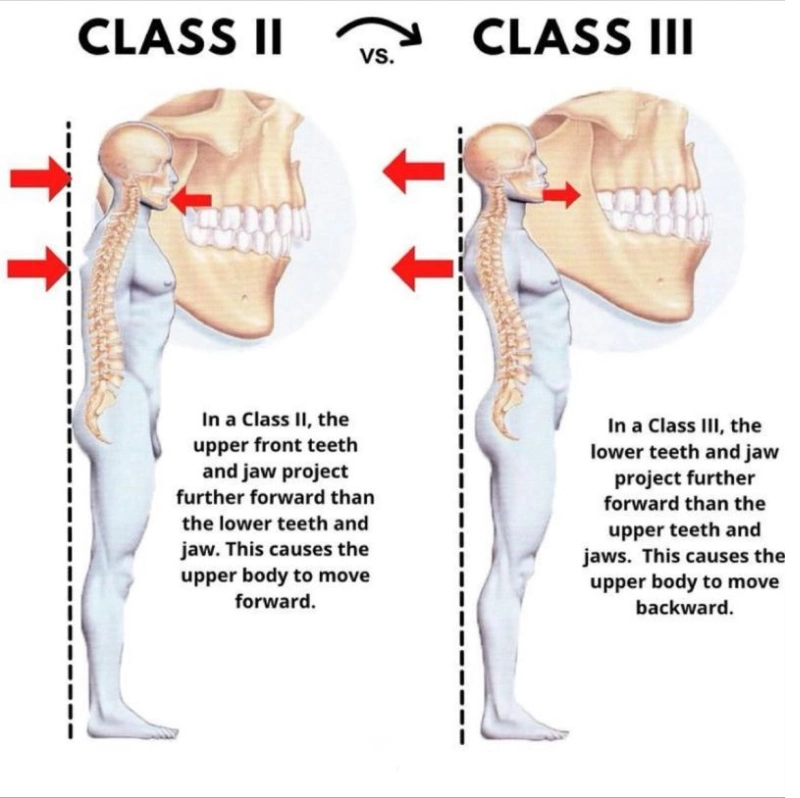
Consequences of Prolonged Jaw Misalignment
Jaw disorders (temporomandibular joint disorders referred to as TMJ or TMD) are often a symptom of overuse syndromes that transfer to the jaw. Because the jaw is functionally oriented between the bones of the skull above and the cervical spine and airway below, these regions often become misaligned relative to one another. This means if there is uneven head position, there may be one side of the jaw that is under more pressure or restriction. If the body position is uneven, like one shoulder always lower than the other, the head will often lean the other way to feel balanced. When this happens, pain and joint changes at the jaw can occur, causing our teeth to feel misaligned. We might even go to the orthodontist to fix our teeth, when our head position is the actual problem.
In addition to jaw pain with asymmetrical jaw issues, many people experience neck pain or tension, headache/migraine, breathing and swallowing issues, snoring and sleep related breathing restrictions.
Case Studies Illustrating Posture and Dental Health Correlations
If misalignment is strong enough, or lasts long enough, the head will adapt. We often see asymmetry in eye or ear position in those who have had long-term movement dysfunction, dental or jaw issues. Other adaptations can be seen such as an uneven roof of the mouth, teeth that are lower on one side and even uneven foot arches. Research has shown that the arch of the feet and the shape of the palate directly relate to each other. Another example of the effects of long-term body misalignment can be seen in research that looks at scoliosis and crossbites (1, 2).
5. Assessment Approaches Used by Integrative Postural Therapists
Evaluating Dental and Postural Relationships
Postural specialists trained through advanced methods approach the body very differently from traditional physical therapists, chiropractors, or personal trainers—even those who claim to focus on posture. Conventional training often treats posture as a habit, much like a childhood piano teacher telling you to “sit up straight,” with the assumption that repeated reminders will lead to lasting change. Unfortunately, this simplistic approach doesn’t address the deeper, more complex nature of human posture.
In reality, good posture isn’t just about how you sit or stand—it’s about how safe, stable, and balanced your body feels, and whether it can breathe efficiently without compensation. These deeper physiological and neurological factors are rarely covered in standard healthcare education. As a result, many providers may not be equipped to fully address postural issues unless they have additional training in areas like autonomic nervous system function, breathing mechanics, dental alignment, tongue function (myofunctional therapy), or even vision therapy.
The mouth and oral cavity play a central role in both breathing and nourishment, making them a top priority for the body’s sense of survival. Because of this, a truly effective postural therapist needs to understand how dental structure, tongue positioning, breathing, pelvic stability, and connection to the ground all influence a person’s posture.
Some postural specialists begin by addressing common patterns in the body through an orthopedic lens and move into neurologic assessments only as providers move into secondary and tertiary coursework. For instance, they often guide clients toward better left-sided movement while improving diaphragm function and right chest expansion for balanced breathing. This means that the level of training your postural specialist has undertaken will matter in their ability to properly intervene or even establish integrative dental relationships.
AIA-trained providers (Applied Integration Academy) go a step further: they look beyond common patterns to create customized care plans for the client’s unique compensations, taking into account asymmetries across both sides and multiple regions of the body with functional activity, neurosensory postural processing, and grounding (proper loading/unloading of stacked body chambers) at the forefront of the assessment and care plan. Importantly, AIA practitioners recognize that postural patterns are symptoms—not root causes. Simply reinforcing movement to one side (like always correcting to the left) can create new dysfunctions layered on top of old ones. That’s why AIA uses a specialized assessment tool called the Spectrum of Lateralized Patterns. This tool helps identify how well each side of the body is functioning and whether the client properly uses grounding to establish safety, balance, and control. With this insight, AIA providers can tailor interventions that truly support long-term postural health, rather than just addressing the appearance of postural patterns.

Diagnostic Tools and Techniques
How Integrative Postural Therapists Assess the Body: A Two-Way Street
Integrative postural therapists use a blend of observation and objective testing to understand how your body’s posture is affected from both the ground up (ascending influences) and the head down (descending influences).
Ascending Patterns: From the Feet to the Jaw
Let’s start by looking at how patterns in the lower body can influence the upper body—especially the teeth and jaw. Imagine that one arch of your foot is lower than the other. Most people with this issue tend to shift more weight onto the side with the higher arch. This small shift sets off a chain reaction:
- The pelvis on the loaded (higher-arched) side bears more weight and rotates slightly.
- This causes that side of the pelvis to tip backward, while the opposite side tips forward.
- The shoulder on the loaded side is likely to appear lower and more compressed.
- The head, in trying to remain upright and level, may subtly tilt away from the loaded side.
- The eye on the loaded side may sit slightly higher.
- Finally, the chin may shift toward the opposite (unloaded) side, with more tooth contact on the loaded side.
In a balanced body, these shifts would correct themselves as you shift your weight to the other side. But if your body doesn’t naturally reverse the pattern—if the same imbalances stay in place even when your weight shifts—then you’re stuck in what we call a postural pattern.
It’s kind of like what your mom used to say: “If you make a face long enough, it’ll stay that way.” The body works the same way—it adapts, but sometimes those adaptations get “stuck.”
Descending Patterns: From the Teeth to the Ground
Now, let’s flip the script and consider how patterns in the head and jaw can affect the rest of the body.
If your bite (how your teeth fit together) feels “just right,” but we then change your head position, your brain may still interpret the new position as off-balance—even if you’re standing up straight in the mirror. That’s because your brain relies on consistent signals from your eyes, head, and jaw to maintain a sense of what “level” feels like.
Here’s the issue: If your brain’s sense of straightness is actually tilted, it will direct the rest of your body to adjust accordingly. This can result in your whole posture adapting to maintain what feels like “straight,” even if it’s not. In these cases, even the best exercise program won’t work well unless we address what’s happening at the top.
By adjusting the input from the teeth, tongue, or palate—sometimes with a dental splint—we can shift the brain’s perception of the head’s position and create new, more functional postural options for the body. When these changes occur, we often see immediate improvements in tests that measure balance, alignment, and movement patterns.
This is why identifying descending influences—those coming from the head, jaw, and nervous system—is critical. If these aren’t addressed, patients often feel stuck in physical therapy, even if they’re doing all the right exercises.
A Whole-Body Assessment
Everything we’ve talked about—both the patterns we observe and the way we test them—makes up a full integrative postural assessment. This includes:
- Visual and structural observations from head to toe
- Positional tests to check movement restrictions
- Breathing assessments to see where airflow is restricted
- Grounding tests to evaluate your ability to feel stable and supported
- Dental, vision, and tongue function tests
- Functional movement tests related to walking and weight-shifting
By combining insights from all of these areas, integrative postural therapists can design care plans that address the root causes of postural imbalances—both from the ground up and from the head down.
6. Therapeutic Interventions for Posture Issues
Integrative Treatment Strategies
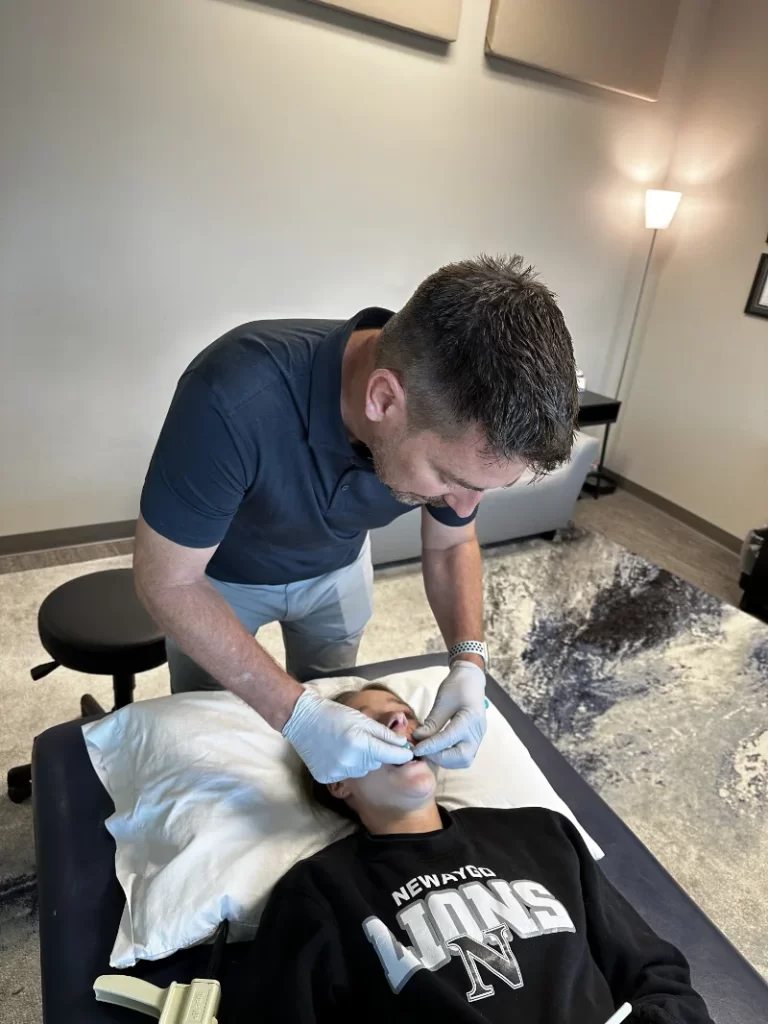
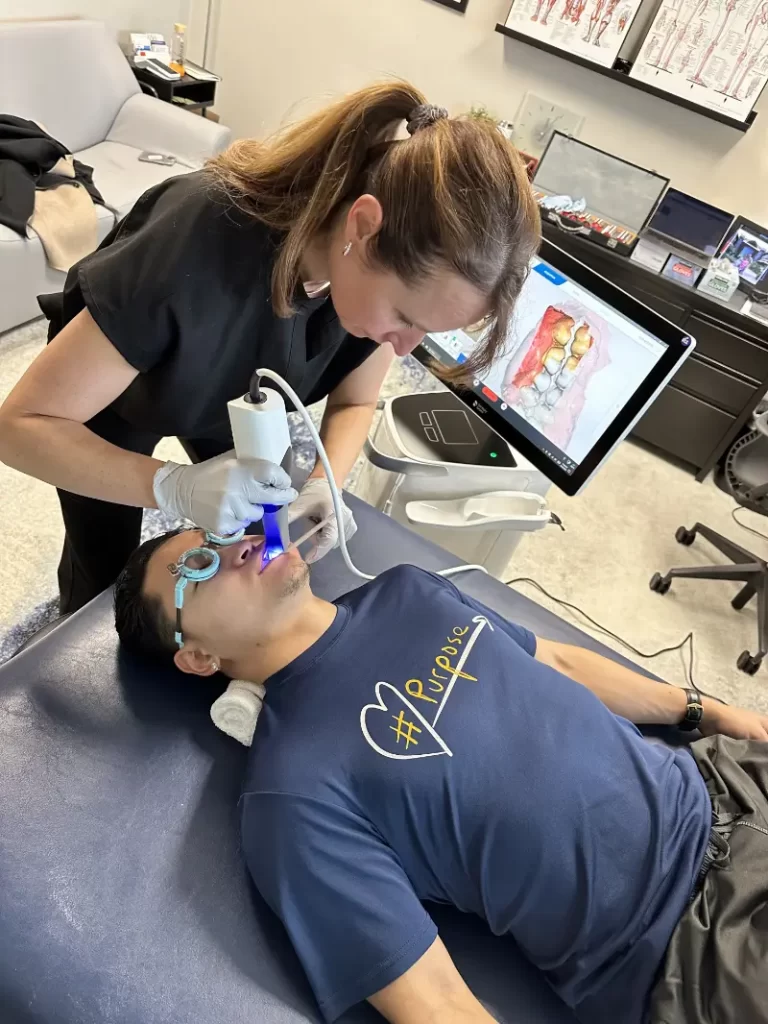
Integrative postural therapists collaborate with dentists, optometrists, and podiatrists to identify and correct sensory posture issues. If a patient’s habitual bite misaligns with body posture or optimal breathing, the therapist provides objective guidance to the dentist to fabricate a dental appliance that restores motion, improves breathing, and controls pain. These appliances may resemble bite splints or retainers. Other treatment options include tongue and jaw exercises or orthodontics like Invisalign. Once a dental strategy is determined, exercises involving grounding, breathing, and positioning help the body adapt to better posture and performance. This often allows patients to gradually reduce or discontinue the appliances used for progress.
Patient Education and Self-Management
Physical therapists, doctors, or chiropractors do not learn about dentistry in school, nor do dentists learn about posture and body mechanics. Yet the research is clear, we use our teeth, tongue, and jaws to manage our airway and head position in conjunction to our body position below our neck. Once your healthcare professional recognizes this important connection the value of interdisciplinary care is clear.
Once you have made the connection and get it treated, your body wants you to thrive. Balance and breathing exercise is all it takes to maintain improvements. This is why so many people throughout the world thrive on yoga and breathwork.
Ask your dentist if they have heard of this and want to get involved. If you are a dentist and can think of cases you have treated that seem to resemble these concepts, reach out and we can set up a collaborative meeting.
7. Conclusion
The Holistic Impact of Dental Health on Posture
Posture isn’t static—it’s a responsive dance between your body, brain, and breath–relative to gravity. The jaw is a major conductor in that dance. When we understand the mouth-body connection, we unlock powerful tools for lasting change.
From subtle head shifts to major movement patterns, your body is always listening to your bite. When that input is clear, your entire system can find better balance, breathing, and well-being.
Ready to Take the Next Step?
If you’ve tried traditional physical therapy, chiropractic care, or other orthopedic approaches without lasting results, it may be time to look deeper.
At SIMIO Health & Wellness, we offer integrative postural assessments that connect the dots between your bite, breath, and body. Whether you’re dealing with chronic tension, movement restrictions, or unexplained pain, our team can help you uncover the root causes and create a plan for real, lasting change.
Reach out today to schedule your personalized evaluation and begin your journey toward better balance, alignment, and health.
